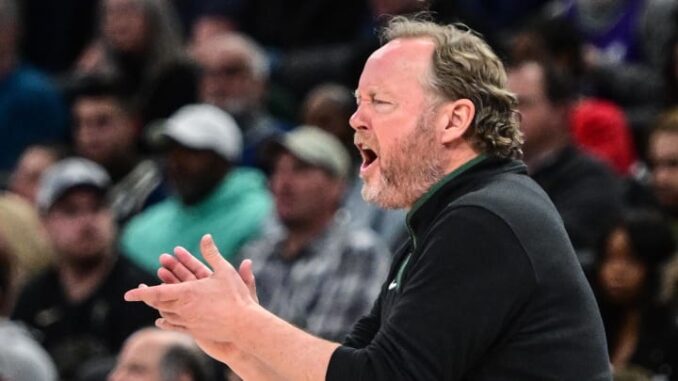
Milwaukee, WI** — In a sports world defined by its highs and lows, few stories exemplify this dichotomy quite like that of Mike Budenholzer, the former head coach of the Milwaukee Bucks. Once celebrated as a herald of success and innovation in NBA coaching, Budenholzer’s journey took an unexpected turn as he found himself out of a job following a tumultuous end to the 2022-2023 season. His time in Milwaukee is a vivid reflection of the unpredictability of professional sports, encapsulating brilliance, disappointment, and the harsh realities of a results-driven industry.
Budenholzer was appointed head coach of the Milwaukee Bucks in 2018, inheriting a roster led by superstar Giannis Antetokounmpo. The stakes were high, as the Bucks had immense potential but were still seeking their first championship since 1971. In his first season at the helm, Budenholzer transformed the team’s playstyle, emphasizing a fast-paced offense and solid defensive fundamentals. The aggressive tactics paid off almost immediately, leading the Bucks to a franchise-record 60 wins in the 2018-2019 season.
The zenith of Budenholzer’s tenure came in the 2020 NBA season when he guided the Bucks to their first championship in five decades. Giannis, under Budenholzer’s tutelage, secured the NBA Finals MVP, cementing his status as one of the league’s elite players. The streets of Milwaukee reverberated with jubilations as fans celebrated the culmination of years of earnest hope and revival in Bucks basketball. Budenholzer was named the NBA’s Coach of the Year in 2019, a recognition that exemplified his transformative impact on the franchise.
However, the following seasons were less kind to Budenholzer and the Bucks. Despite high expectations, Milwaukee consistently fell short of title aspirations, leading to mounting scrutiny of Budenholzer’s coaching decisions. The 2021-2022 season ended in disappointment, as the Bucks lost to the Boston Celtics in the Eastern Conference Semifinals, raising questions about tactical adjustments and in-game management from the Milwaukee head coach.
The trend continued during the 2022-2023 season. The Bucks had another robust regular season, finishing atop the Eastern Conference standings. Yet, as the playoffs approached, whispers of Budenholzer’s coaching acumen began growing louder. The team faced the Miami Heat in the first round, a matchup that many prognosticators viewed as a mere formality. However, the Bucks were swiftly dispatched in a shocking five-game series, culminating in a heartbreaking Game 5 defeat after a historically disappointing performance in which they succumbed to a lower-seeded team.
The fallout from this swift exit was palpable. The Bucks organization, under the guidance of ownership and general manager Jon Horst, had to reevaluate their trajectory. The playoffs are the ultimate litmus test in the NBA, and when aspirations of a championship evaporate so early, heads often roll. Budenholzer became the focal point of the scrutiny, with fans and analysts questioning the effectiveness of his strategies, the preparedness of the team, and the failures to execute fundamental plays in critical moments.
On May 4, 2023, the Bucks officially announced Budenholzer’s departure, marking a whirlwind end to what was an era of both remarkable success and painful failures. The news sent shockwaves through the NBA community, with many reflecting on the duality of Budenholzer’s tenure—an impressive championship-pedigree coach who struggled with playoff execution. The days that followed were filled with tributes to Budenholzer’s achievements in Milwaukee alongside calls for fresh leadership to guide a talented roster with championship aspirations.
As the dust settled, Budenholzer’s future in coaching remained uncertain. A coach of his caliber—in possession of a championship ring and the accolades that come with it—would surely attract interest from other franchises looking to reshape their team culture or push for a playoff run. Several reports indicated that Budenholzer was already in the conversation for head coach openings around the league, as teams valued his strategic insights and experienced approach to team building.
Yet the abrupt end to his tenure in Milwaukee serves as a poignant reminder of the harsh realities in professional sports. A coach’s fate can often hinge on a few critical moments in a playoff series, and the very same fans who applauded Budenholzer’s brilliance just years prior were now calling for his dismissal after a disappointing postseason. It’s a narrative as old as the league itself, where results often overshadow merit, and the elation of victory can so quickly turn to the agony of defeat.
Budenholzer’s time in Milwaukee will surely be analyzed, dissected, and debated in the annals of NBA history. As he reflects on his journey, from rising star to Coach of the Year to unwelcome unemployment, one thing is clear: the rollercoaster ride of professional sports is relentless. Coaches, players, and teams must find a way to adapt or risk being left behind in the rapidly changing landscape of the game. While Budenholzer’s immediate future may be uncertain, his legacy in Milwaukee—and the lessons learned from it—will endure well beyond his time on the sidelines.
As the Bucks embark on their next chapter, they will seek a coach capable of harnessing the talent of their roster and delivering long-awaited postseason success. Budenholzer’s departure may have closed one door, but in the world of professional sports, another door is always waiting to be opened.
Leave a Reply